One of the most pervasive anxieties patients face when considering a smile makeover isn’t about the aesthetics—it’s about the mechanics. A common question echoes in consultation rooms: “If I bite into an apple, will my smile fall apart?”
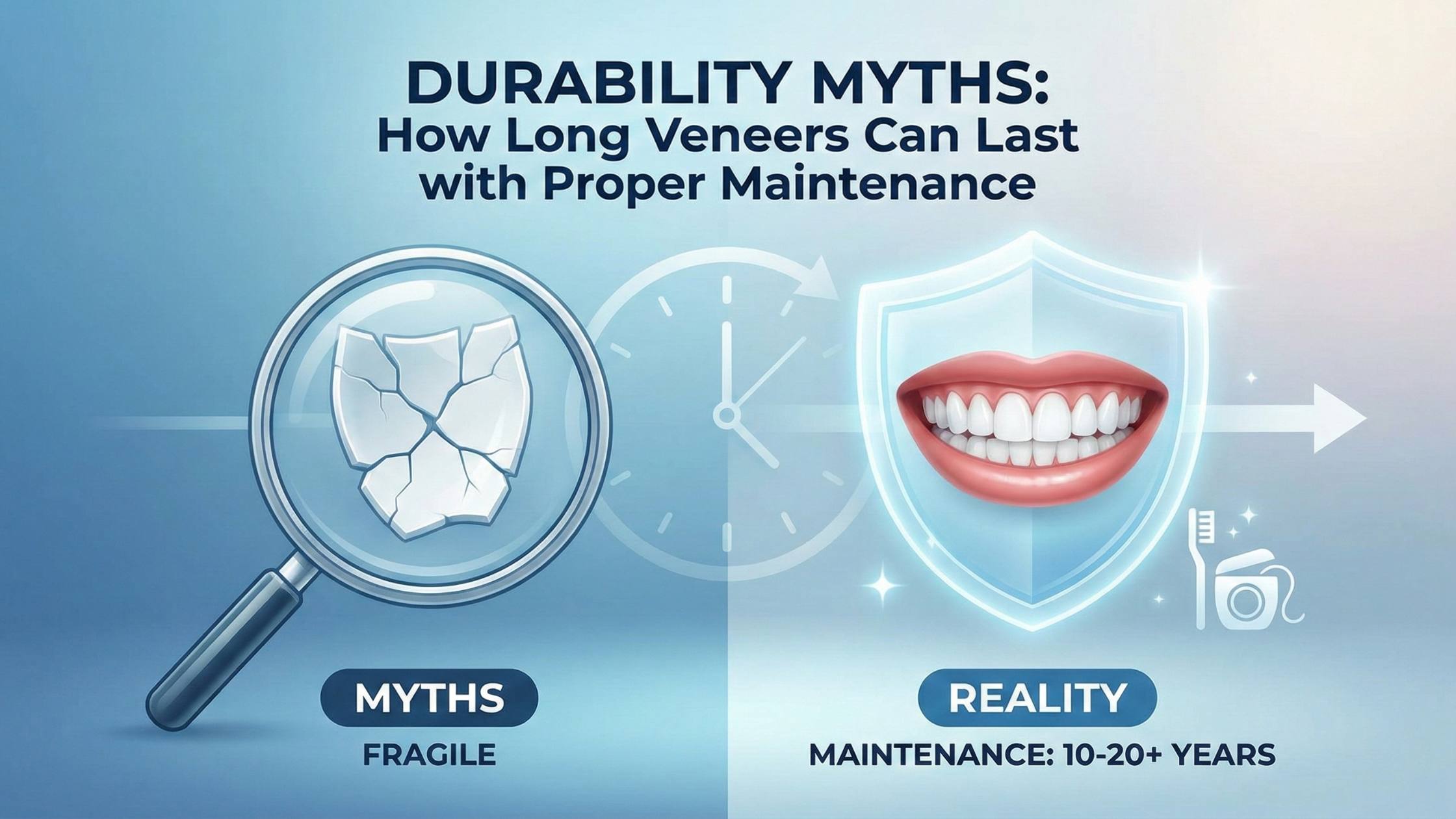
There is a lingering misconception that dental veneers are akin to “porcelain dolls”—beautiful to look at, but far too fragile for the rigors of real life. This fear leads many to believe that upgrading their smile requires adopting a restricted lifestyle or a soft-food diet.

The reality, however, is scientifically quite the opposite. Modern cosmetic dentistry has evolved significantly. We are no longer just “gluing” aesthetic covers onto teeth; we are engaging in advanced biomimetic bonding. When executed correctly, how long veneers can last can extend for decades, provided the patient shifts their mindset from “fragility” to “maintenance mastery.”
At Vinnova Dental, we believe that an educated patient is a satisfied patient. Let’s dismantle the myths surrounding veneer durability and explore exactly how you can protect your investment for the long haul.
The Lifespan Breakdown: Why Material Matters
To understand longevity, we must first understand the engineering behind the smile. Not all veneers are created equal, and the durability of your new smile is heavily dictated by the material chosen and the bonding protocol used.

The Chemistry of the Bond
In the past, dental restorations relied on mechanical retention (cementing a crown onto a peg). Today, we use adhesive dentistry. When a porcelain veneer is bonded to enamel, it creates a monoblock. Essentially, the ceramic and the tooth structure fuse to become one cohesive unit. This restores the structural integrity of the tooth, often making the veneered tooth stronger than it was before, particularly if the natural tooth was worn or filled with large composites.
Porcelain vs. Composite Resin
When discussing longevity and veneers cost, it is vital to distinguish between the two primary materials:
- Composite Resin: These are sculpted directly onto the tooth. While they are beautiful and minimally invasive, resin is a plastic-based material. It is more porous than porcelain, meaning it is more susceptible to micro-abrasion and staining over time.
- Porcelain: This is a glass-ceramic, often reinforced with materials like lithium disilicate. It has a high compressive strength. It mimics natural enamel not just in appearance, but in wear patterns. Because it is non-porous, it is incredibly resistant to the chemical erosion that occurs in the mouth.
While composite requires more frequent polishing and eventual replacement (often every 5-7 years), porcelain is the “heavy lifter” of cosmetic dentistry, frequently lasting 15 to 20 years—or longer—with pristine care.
Top 3 Myths About Veneer Fragility
Anxiety usually stems from misinformation. Let’s look at the science to debunk the three most common myths regarding the fragility of veneers teeth.
Myth 1: “I Can Never Eat an Apple or Corn on the Cob Again.”

The Reality: You absolutely can, but technique matters. Veneers possess incredible high compressive strength (biting down), but like natural enamel, they have lower shear strength (twisting or tearing forces). You don’t need to live on a soup diet. However, we recommend slicing apples or cutting corn off the cob not because the veneer is weak, but to reduce leverage forces that could damage any tooth—natural or veneered. It is a preservation habit, not a fragility requirement.
Myth 2: “They Will Stain Just Like My Normal Teeth.”
The Reality: High-quality porcelain is impervious to stains. Unlike natural enamel, which has microscopic pores that absorb pigments from coffee, wine, and berries, glazed porcelain is smooth and glass-like. If you see “staining” on a porcelain veneer, it is usually surface accumulation that can be wiped away during a hygiene cleaning, or it is gum recession revealing the natural tooth root. Composite veneers, conversely, will pick up stains over time, similar to natural teeth.
Myth 3: “They Will Fall Off If I’m Not Careful.”
The Reality: De-bonding is extremely rare in modern dentistry. In the early days of cosmetic dentistry, cements were soluble. Today, the bonding agents used are hydrophobic and incredibly potent. Once the bond has matured (usually within 24 hours of placement), the veneer essentially becomes part of the tooth. Most “failures” are not the veneer popping off, but rather trauma to the underlying tooth structure itself.
The Maintenance Checklist: Mastery Over Maintenance
Durability is a partnership. Vinnova Dental provides the technical excellence, but the day-to-day longevity is in your hands. A smile makeover is a luxury car; it performs beautifully, but it still requires premium fuel and regular service.
Here is your actionable guide to extending the life of your smile:
1. The “Non-Abrasive” Daily Routine
Many commercial toothpastes marketed as “whitening” contain abrasive particles (like silica or baking soda) designed to scrub stains off natural enamel.
- The Risk: These abrasives act like sandpaper. On porcelain, they can scratch the surface glaze, making it dull. On composite, they create micro-scratches that attract stains.
- The Fix: Switch to a non-abrasive gel toothpaste. You no longer need “whitening” properties for the veneers themselves, as their color is set.
2. The Nightguard Rule (Non-Negotiable)

This is the single most significant factor in veneer survival. Bruxism (teeth grinding) often happens during sleep. The force exerted during nocturnal grinding can be six times greater than the force used during normal chewing.
- Why it matters: Even the strongest ceramic can fracture under hundreds of pounds of repetitive pressure.
- The Solution: A custom-made occlusal splint (nightguard) protects your investment. It acts as a shock absorber, distributing the force and preventing the ceramic from clashing against the opposing teeth.
3. Flossing is for the Gums, Not Just the Teeth
The margins—where the veneer meets your gum line—are the most vulnerable points. If you neglect flossing, gum disease (gingivitis) can set in. If the gums recede, the margin becomes exposed, which can lead to decay under the veneer.
- The Fix: Use a soft, waxed floss. Ensure you are curving the floss around the tooth (C-shape) to clean below the gum line without snapping the floss down aggressively.
4. Regular Professional Surveillance
You cannot diagnose micro-issues in the mirror. Scheduling regular visits with a skilled veneers dentist near me ensures that bite imbalances or minor edge wear are caught immediately. A simple polish or bite adjustment today can prevent a fracture tomorrow.
Composite vs. Porcelain: A Cost-to-Life Ratio
When patients ask how much veneers teeth solutions cost, it is crucial to look at the “Cost-to-Life” ratio rather than just the upfront price tag.
While composite bonding is an excellent entry point with a lower initial financial threshold, it is a maintenance-heavy option.
- Composite: Lower upfront cost, but requires polishing every 6-12 months and likely replacement every 5 to 7 years.
- Porcelain: Higher upfront investment, but offers “install and maintain” simplicity. With a lifespan of 15+ years, the cost-per-year of wear is often comparable to, or even better than, composite bonding over the long term.
At Vinnova Dental, we help you crunch these numbers to ensure you are choosing the material that fits not just your budget, but your long-term lifestyle goals.
The Installation Factor: Longevity Starts in the Chair

It is important to note that a veneer is only as durable as the preparation behind it. A poor fit leads to failure, regardless of how well you brush.
The veneers process is a meticulous workflow that requires precision at the micron level.
- Preparation: We ensure the tooth is prepped (if necessary) to allow for the thickness of the ceramic so it doesn’t look bulky.
- The Impression: Digital or physical impressions must capture the exact margin of the gum line.
- The Bond: Isolation is key. We use dental dams or specialized isolation systems to ensure the tooth is perfectly dry during bonding. Even a drop of saliva can compromise the chemical bond.
- Occlusal Adjustment: This is the most critical step. We check how your teeth slide against each other. If a veneer is “high” (hitting too soon when you bite), it will eventually crack.
By adhering to strict clinical protocols, we minimize the risk of technical failure.
Visual Proof of Longevity

Don’t just take our word for it. When researching cosmetic dentistry, look for “healed” results. Many photos on social media are taken immediately after the procedure. However, the true test of quality is how the smile looks one, five, or ten years later.
We encourage you to view our veneers before and after gallery. You will notice that in high-quality work, the gums look pink and healthy, hugging the veneers naturally. This integration suggests a smooth margin and a restoration that the body has accepted—a key indicator that the smile is built to last.
When Replacement is Necessary
Transparency is vital in healthcare. While veneers are exceptionally durable, they are not immortal. Nothing in the human body lasts forever-forever.
Signs that it might be time to refresh your veneers (usually after the 15-20 year mark for porcelain) include:
- Gum Recession: Natural aging may cause gums to lift, revealing the root.
- Trauma: Accidental impacts (sports injuries, falls).
- Esthetic Shifts: Your face changes as you age; sometimes patients choose to replace veneers simply to update the design to match their mature features.
Rest assured, Vinnova Dental is here for the full lifecycle of your smile, from the initial design to maintenance and eventual refreshment decades down the line.
Frequently Asked Questions
Q: Can I drink coffee with veneers? A: Yes. Porcelain veneers are highly stain-resistant. However, if you have composite veneers, you should minimize black coffee or rinse with water immediately after drinking. Regardless of material, maintaining good hygiene ensures the edges of the veneers remain stain-free.
Q: Do veneers ruin my natural teeth underneath? A: No. Modern techniques often allow for “minimal prep” veneers. We remove a fraction of a millimeter of enamel—roughly the thickness of a contact lens—to ensure a seamless fit. The bonding process actually seals and protects the underlying tooth structure from decay, provided hygiene is maintained.
Q: What happens if a veneer chips? A: If it is a minor chip in porcelain, it can sometimes be polished smooth. If it is significant, the veneer may need replacement. Composite veneers are easier to repair, as new resin can be added directly to the chip in a single visit.
Conclusion
The myth of the “fragile veneer” is a relic of the past. With the advancements in ceramic technology and adhesive dentistry, a smile makeover is a robust, long-term investment in your confidence and oral health. Longevity is not a matter of luck; it is a combination of precision dentistry and your dedication to simple, daily maintenance.
By wearing your nightguard, choosing the right products, and keeping up with your visits, there is no reason your new smile cannot light up the room for decades to come.
Ready to invest in a smile that lasts? Contact Vinnova Dental today to schedule your consultation and discover the durable possibilities of modern cosmetic design.