We all know the routine. You wake up, and the first thing on your mind is that warm, comforting cup of coffee. Or perhaps, after a long week, nothing beats relaxing with a glass of Pinot Noir.
But if you are considering upgrading your smile with dental veneers, a panic might set in. You’ve seen the Hollywood smiles—blindingly white and perfect. Then you look at your coffee mug and wonder: “If I get veneers, do I have to give up my favorite drinks forever?”
It is one of the most common questions we hear at Vinnova Dental. When you invest in your confidence, you want to ensure that investment lasts. You don’t want to spend money on a sparkling white smile only to have it turn yellow six months later.
The short answer is: It depends entirely on the type of veneers you choose.
In this guide, we are going to dive deep into the science of staining. We will compare how different materials react to your favorite foods, bust some myths about whitening, and give you the ultimate survival guide for keeping your veneers teeth bright without giving up your caffeine fix.
The Science of Staining: Why Do Teeth Turn Yellow?

To understand how veneers behave, we first need to understand why natural teeth stain.
Your natural tooth enamel is porous. If you looked at it under a microscope, you would see tiny ridges and pits. When you drink dark liquids like coffee, tea, or red wine, the chromogens (color pigments) in these drinks seep into those microscopic pores. Over time, these pigments build up, causing your teeth to look yellow or dull.
So, how do veneers compare? Do they have the same pores?
The Two Contenders: Porcelain vs. Composite
When searching for a “dentist near me” for veneers, you will generally be offered two material choices. Their resistance to staining is vastly different.
- Porcelain Veneers: The glass-like shield.
- Composite Veneers: The resin-based layer.
Let’s break down how each handles the “Coffee Test.”
Porcelain Veneers: The “Teflon” of Dentistry
If you are looking for the gold standard in stain resistance, porcelain veneers are the clear winner.
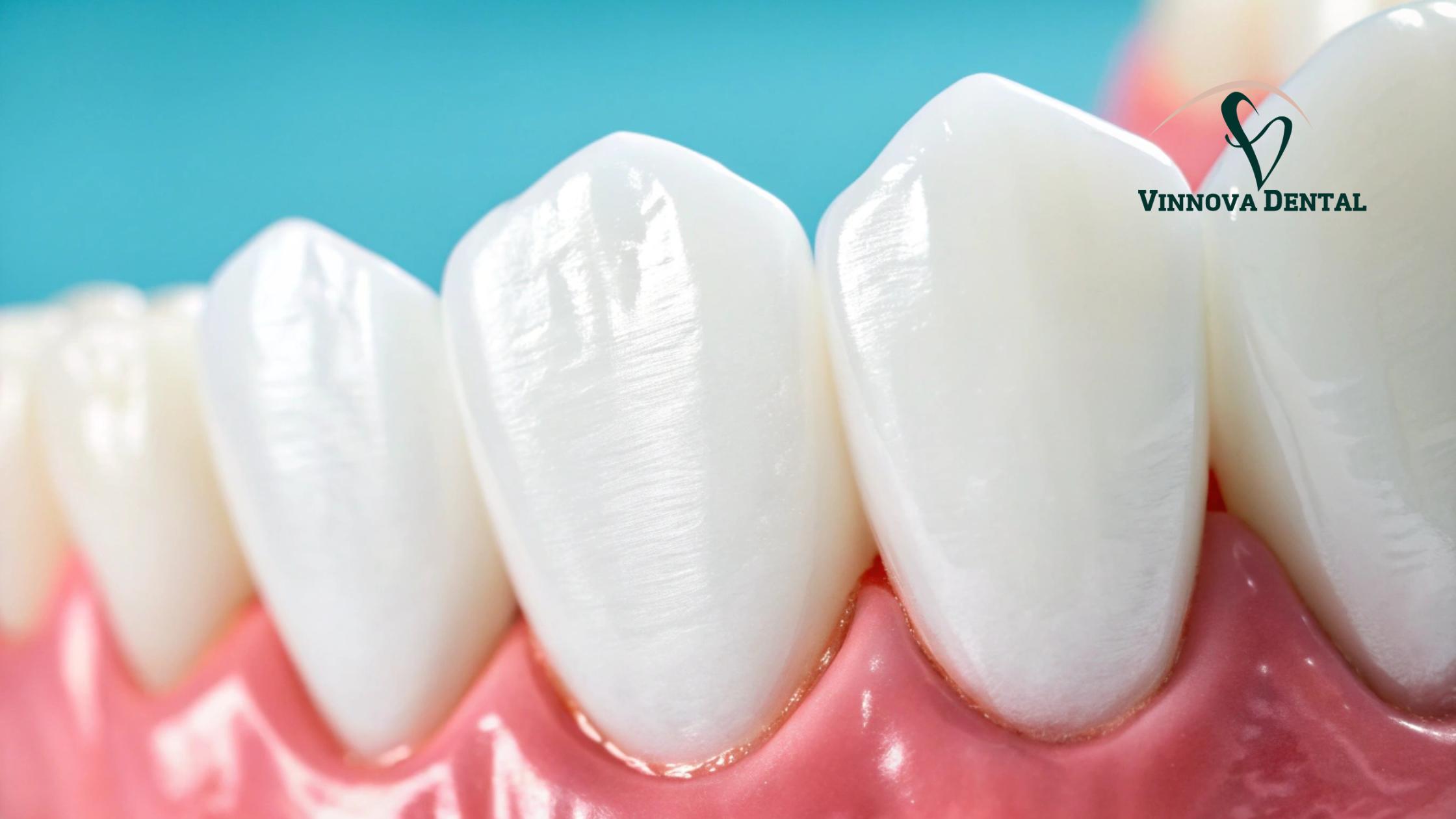
Porcelain is a ceramic material that is fired at incredibly high temperatures in a dental lab. This process creates a surface that is incredibly smooth and non-porous. Unlike your natural enamel, high-quality dental porcelain is essentially like glass.
The Coffee Test: Imagine pouring coffee onto a glass window pane. It doesn’t soak in; it just sits on the surface and wipes right off. That is essentially how porcelain veneers interact with staining agents.
The Verdict: Porcelain veneers are highly stain-resistant. You can drink coffee, tea, and red wine with a high degree of confidence that your veneers will remain as white as the day they were bonded. They do not yellow over time like natural teeth.
However, there is a catch. (We will get to that in the “Danger Zones” section below).
Composite Veneers: Beautiful but Vulnerable
Composite veneers are made from a resin material—a mixture of plastic and glass particles. They are an excellent, cost-effective option that can be applied in a single visit.
However, structurally, composite resin is more porous than porcelain.
The Coffee Test: Think of composite resin more like a high-quality Tupperware container. When it’s new, it’s pristine and repels food. But if you store spaghetti sauce in it every day for a year, and scrub it with a rough sponge, it will eventually start to absorb that orange tint.
The Verdict: Composite veneers can stain. Over time, they act somewhat like natural teeth. Frequent exposure to dark liquids, combined with surface scratches from brushing, can cause them to lose their brightness and take on a yellow or grey hue.
If you are a heavy smoker or drink 5 cups of black coffee a day, composite veneers will require more maintenance and polishing to keep them looking fresh.
The “Danger Zones”: Where Stains Actually Hide
If porcelain is stain-proof, why do some people with porcelain veneers still complain about discoloration?
This is a crucial distinction. The veneer itself might not stain, but the areas around it can. Here are the three danger zones you need to watch.
1. The Margins (The Edge)
The “margin” is the line where the veneer ends and your natural tooth begins (usually right at the gum line). This area is sealed with a dental bonding cement.
While the porcelain is impervious, the bonding cement is not. If the margin isn’t perfectly smooth, or if your gums recede due to lack of flossing, this cement line can become exposed. Coffee and wine can stain this cement line, creating a thin brown outline around your beautiful white veneer.
2. The Adjacent Teeth
Most people don’t get veneers on every single tooth. You might get the top 6 or 8 visible teeth done (the “Social Six”).
If you continue to drink heavy amounts of staining liquids, your natural bottom teeth and the molars in the back will continue to yellow naturally. Meanwhile, your porcelain veneers will stay bright white. Over a few years, this can create a noticeable color mismatch between your veneered teeth and your natural teeth.
3. Surface Scratches
This applies mostly to composite veneers, but can happen to porcelain in extreme cases. If you use an abrasive toothpaste (like charcoal paste or heavy-duty baking soda scrub), you are essentially sandpapering your veneers.
These micro-scratches destroy the glossy finish. Once the surface is rough, it traps pigments easily. A rough veneer is a stained veneer.
The Top 5 Stain-Causing Offenders (Ranked)
If you have veneers—especially composite ones—you should be aware of the “Big 5” that threaten your smile’s brightness.
- Tobacco (Smoking/Vaping): The absolute worst offender. Tar and nicotine cause stubborn yellow/brown stains that are incredibly difficult to polish off composite resin.
- Black Coffee & Tea: The tannins in tea actually make it slightly more staining than coffee!
- Red Wine: acidic and highly pigmented—a double threat.
- Curries & Turmeric: These spices are potent dyes. If they can stain your clothes permanently, they can stain your resin veneers.
- Dark Berries: Blueberries, blackberries, and pomegranate juice.
Can You Whiten Veneers if They Stain?
This is the most important question to answer before you spend money on “whitening kits” at the pharmacy.
No. You cannot whiten veneers.
Traditional teeth whitening gels (bleach) work by penetrating the enamel of natural teeth to oxidize stains. Because porcelain is non-porous, the bleach cannot penetrate it. It will have absolutely no effect on the color of the porcelain.
If you apply whitening gel to a smile that has both veneers and natural teeth:
- Your natural teeth will get whiter.
- Your veneers will stay the same color.
- You might end up with an even more uneven smile than before.
The Solution for Stained Veneers:
- For Composite: Your dentist can often perform a “resurfacing” or professional polish. We buff away the top microscopic layer of the resin to reveal fresh, unstained material underneath.
- For Porcelain: If porcelain veneers appear stained, it is usually surface accumulation (plaque/tartar). A professional cleaning by a hygienist will restore them to their original glory. If the color is actually in the material (which is rare) or the cement has yellowed, the veneer usually needs to be replaced.
7 Habits to Keep Your Veneers Sparkling (Without Quitting Coffee)

You don’t have to live on a diet of water and white bread to keep your smile beautiful. Here is the realistic “Veneers Lifestyle” guide.
1. The “Sip and Rinse” Technique
You can enjoy your morning coffee. Just don’t let it sit in your mouth. After you finish your cup, take a swig of water and swish it around. This washes away the tannins before they have time to settle into the margins or composite pores.
2. Use a Straw (When Possible)
Okay, hot coffee through a straw is weird. But for iced coffee, iced tea, or sodas, use a straw! It bypasses the front surfaces of your teeth entirely, sending the liquid straight to the back of your mouth.
3. Choose the Right Toothpaste
Throw away the “Whitening” toothpaste. It is too abrasive. Look for a non-abrasive gel toothpaste. Ask your cosmetic dentist for specific brand recommendations that are safe for veneers.
4. Floss Daily (Protect the Margins)
Remember that brown line we talked about? Flossing prevents it. By keeping the gum line clean, you protect the bonding cement from exposure and staining.
5. Professional Polishing
If you have composite veneers, book a polishing appointment every 6 months. It’s like detailing a car—it restores the shine and creates a smooth surface that repels stains.
6. Add Milk to Your Coffee
Believe it or not, adding a splash of milk (dairy or plant-based) to your coffee or tea can help. The proteins in the milk bind to the tannins, preventing them from binding to your teeth. Plus, it lightens the color of the liquid!
7. Quit the Tobacco
We know it’s hard, but smoking is the enemy of cosmetic dentistry. Beyond staining, it compromises gum health, which can lead to gum recession and the failure of the veneers entirely.
The Verdict: Is It Worth It?
When patients ask about the veneers cost and the maintenance involved, they often wonder if the staining risk makes it too much hassle.
But think about the trade-off. With porcelain veneers, you are getting a smile that is permanently white and resistant to the aging and yellowing that happens to everyone else. You are essentially pressing “pause” on the aging of your smile.
With composite veneers, you are getting an affordable, reversible, and beautiful upgrade. Yes, they require a bit more maintenance, but the confidence boost is often worth the extra polishing appointments.
The Bottom Line on Staining
- Porcelain: virtually stain-proof. Best for coffee/wine lovers who want low maintenance.
- Composite: susceptible to staining. Requires diligence and regular polishing.
Ready for a Stain-Resistant Smile?

Don’t let the fear of stains keep you from the smile of your dreams. Whether you choose the durability of porcelain or the versatility of composite, the team at Vinnova Dental is here to guide you toward the best choice for your lifestyle.
We can analyze your habits, discuss your aesthetic goals, and create a plan that keeps you smiling confidently—coffee cup in hand.
[Link to Appointment Page]: Book a consultation to discuss which veneer material is right for you. [Link to Our Pricing]: transparent pricing for stain-resistant porcelain options.
Your new smile is waiting. Let’s make it shine.